Is My Child Too Young to Start Sports?
If you have a 2-, 3-, 4-, or even 5-year-old, you may have found yourself wondering: Is my child actually ready for sports?
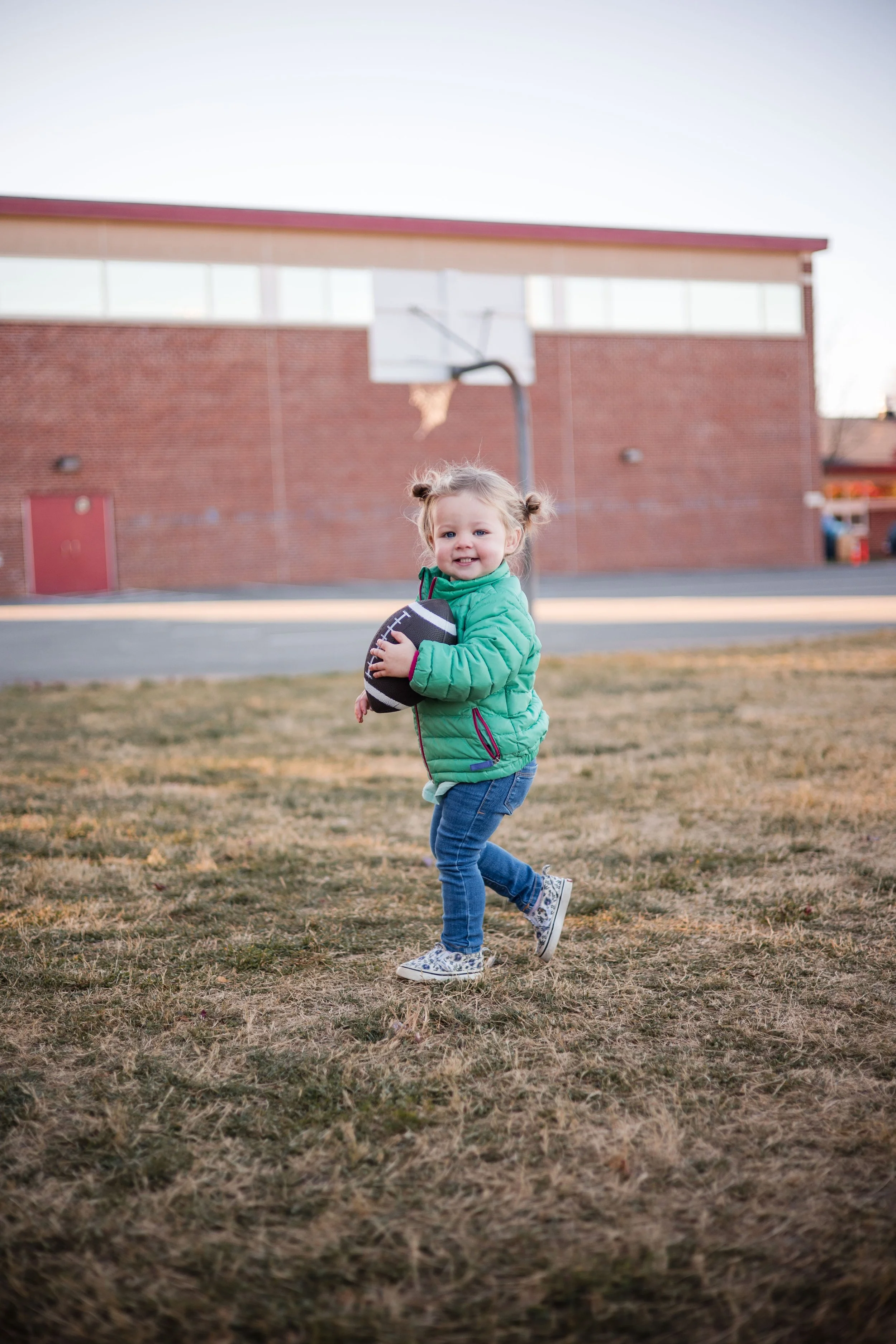
Maybe you've watched another toddler happily run onto a soccer field while yours is firmly attached to your leg. Maybe your preschooler loves kicking a ball around the backyard but seems overwhelmed in a group. Or maybe your child has been begging to play sports, but you're wondering whether they're simply too young.
Here's the good news: there isn't one perfect age to start.
Children develop at different rates, have different personalities, and feel comfortable in group environments at different times. One child may happily join a class at 2 years old, while another may not feel ready until they're 4 or 5. Neither child is ahead or behind.
Especially between the ages of 2 and 7, "ready for sports" shouldn't mean being able to dribble a soccer ball perfectly, understand every rule, or stand quietly in a line for an entire class.
At this age, sports should be about playing, moving, exploring, learning, and having fun.
So, How Do I Know If My Child Is Ready?
Rather than focusing on your child's age, think about how they respond to group activities and new experiences.
Here are 7 signs your child may be ready to give a sports class a try:
1. They show an interest in being active.
Does your child love running, jumping, climbing, throwing, kicking, or playing with balls? They don't need to show an interest in a specific sport yet. Simply enjoying movement is a great place to start.
2. They are beginning to participate in group activities.
Your child doesn't need to be an expert at circle time. But if they're starting to participate in activities at preschool, library story time, playgroups, music classes, or other group settings, they may be ready to try a sports class too.
3. They can follow simple directions, at least some of the time.
We emphasize some of the time for a reason!
Young children aren't going to follow every instruction perfectly, nor should we expect them to. If your child can generally understand simple directions like "put the ball in the basket," or "your turn," that's plenty to get started.
4. They're curious about other children.
Your child doesn't have to be especially outgoing. In fact, a group sports class can be a wonderful opportunity for children who are still learning how to interact with their peers.
Simply noticing other children, wanting to play near them, or showing curiosity about what they're doing can be a sign that they're ready for more group experiences.
5. They can separate from you, or are beginning to.
This one looks very different depending on the child and their age.
A 2-year-old may need a parent nearby for reassurance. A 5-year-old may run onto the field without looking back. Some children need several classes before they're comfortable participating independently.
The goal isn't immediate separation. It's a growing willingness to explore an activity while knowing their trusted adult is nearby.
6. They enjoy trying new things.
Sports introduce children to all kinds of new experiences: new equipment, new movements, new adults, new friends, and new environments.
If your child is starting to become curious about new activities, even if they're hesitant at first, they may be ready to explore sports too.
7. They can participate for short periods of time.
A young child does not need a 50-minute attention span to participate in a 50-minute class!
A developmentally appropriate sports program should expect children to move between activities frequently. If your child can engage in something for a few minutes before moving on, that's a perfectly reasonable starting point.
And What If My Child Isn't Doing All 7?
That's okay!
This isn't a checklist your child needs to "pass" before they're allowed to play sports.
You know your child best. Some children will jump right into their first class. Others may spend the first class watching. Some might participate for ten minutes and then need a break. Others may surprise you and participate far more independently than you expected.
Trying a sports class is part of learning how to participate in a sports class.
We don't expect children to already know how to be athletes before we give them the opportunity to become one.
The Benefits Go Far Beyond Learning Sports
For children ages 2–7, the biggest benefits of extracurricular activities often have very little to do with becoming "good" at a particular activity.
A positive, non-competitive sports environment gives young children opportunities to practice:
Listening and following directions
Taking turns and waiting
Playing alongside other children
Building gross motor skills
Trying something new
Handling small frustrations
Developing confidence
Becoming more comfortable away from a parent or caregiver
Learning that moving their bodies can be fun
And because they're learning these things through play, children often don't even realize how much they're practicing.
They're just having fun.
That's exactly what early childhood sports should feel like.
Why Non-Competitive Sports Matter at This Age
There's plenty of time for scoreboards, standings, tryouts, travel teams, and competition later—if that's something your child eventually enjoys.
Between ages 2 and 7, we're much more interested in helping children develop a positive relationship with movement and sports.
We want them to leave thinking:
"That was fun!"
"I want to do that again!"
"Look what I learned!"
Those experiences build confidence. They give children a foundation of basic movement and sports skills. And they help make future sports experiences feel familiar instead of intimidating.
A child who learns that sports are a safe, fun place to try, make mistakes, learn, and play is building something much more important than an impressive preschool soccer résumé.
They're building a relationship with physical activity that can last far beyond childhood.
Your Child Doesn't Have to Be "Ready" in the Same Way as Everyone Else
One of the most important things we've learned from working with young children is just how different they are.
Some are cautious observers. Some jump in immediately. Some want to know exactly what is going to happen before they participate. Some need extra movement. Some need extra time. Some need a little encouragement from a parent or coach before they're willing to try.
There is room for all of them in sports.
The goal isn't to make every child participate in exactly the same way.
The goal is to create an environment where every child has an opportunity to participate in a way that works for them, build confidence, learn new skills, and experience the joy of playing.
So, is your child too young to start sports?
Maybe they're not ready quite yet and that's perfectly okay.
But if you're seeing some of the signs above, they might just be ready to give it a try.
And sometimes, giving it a try is the best way to find out.
Ready to Give Sports a Try?
Inclyousion Sports offers inclusive, non-competitive sports programs designed specifically for young children. Our classes help children learn foundational sports skills, build confidence, make friends, and discover how much fun movement can be without the pressure of competition.
If your child seems ready for their first sports experience, we'd love to welcome them to the field!