Basketball is a sport filled with opportunities to move, explore, and play, making it a wonderful introduction to organized sports for young children. This sport introduces children to important movement skills like bouncing, throwing, catching, running, and jumping, all while encouraging teamwork, coordination, and confidence.
For children ages 2–10, learning basketball isn't about making every shot or mastering complicated plays. It's about exploring a new sport, having fun with friends, and discovering what their bodies can do.
What Are the Fundamentals of Basketball for Young Kids?
Traditional basketball involves dribbling, passing, shooting, defending, and working together as a team. With young children, we introduce these same foundational skills through age-appropriate activities that make learning fun.
Ages 2–4: Discovery & Movement
Focus: Exploring movement, coordination, listening, and having fun
Skills introduced: Holding a basketball, rolling, bouncing, basic throwing, catching with two hands, and shooting toward a low basket
What it looks like: Rolling basketballs toward targets, bouncing balls during imaginative games, practicing throwing into low hoops, and moving around cones while holding a basketball
At this age, simply learning how to bounce a ball and catch it again is an accomplishment! A basketball activity might involve rolling a ball toward a colorful target, tossing a soft ball into a basket, or exploring how a basketball moves. The goal isn't to understand the game of basketball. It's to build positive associations with movement, equipment, and group activities.
Ages 5–7: Skill Building & Coordination
Focus: Hand-eye coordination, balance, teamwork, and understanding basic basketball concepts
Skills introduced: Dribbling, chest passes, bounce passes, shooting, catching, and moving with the ball
What it looks like: Partner passing games, dribbling around cones, shooting at adjustable hoops, and simple team challenges
Children at this age are beginning to connect individual skills to the larger game. They can practice bouncing a basketball while moving, passing to a teammate, or taking a shot toward the basket. It's also a wonderful age to introduce the idea that basketball is a team sport, and everyone has an important role to play.
Ages 8–10: Confidence & Skill Development
Focus: Coordination, teamwork, sportsmanship, and developing fundamental basketball skills
Skills introduced: Dribbling with greater control, passing accuracy, shooting technique, defensive positioning, and introductory offensive concepts
What it looks like: Skill-building stations, partner challenges, dribbling activities, modified basketball games, and opportunities to practice working together
Older children may begin to understand how passing, movement, and positioning work together during a game. They can explore different ways to move with the ball, find an open teammate, or defend a player without making unnecessary contact. Even as the skills become more advanced, the emphasis remains on participation, confidence, and having fun.
Why We Use a Non-Competitive Curriculum
At Inclyousion Sports, our curriculum is child-first, not competition-first. That means we prioritize:
Individual development over winning
Effort and participation over performance
Positive reinforcement over pressure
Teamwork and encouragement over competition
Building confidence rather than comparing abilities
Success might mean bouncing a basketball for the very first time or learning to pass to a teammate instead of holding onto the ball.
Why Basketball Is a Great Sport for Kids
Bouncing, throwing, catching, running, and jumping are all fundamental movements that support physical development for kids. Basketball also introduces something equally valuable: learning how to work with other people toward a shared goal.
Basketball can help children develop:
Gross motor skills through running, jumping, throwing, and reaching
Hand-eye coordination as they learn to bounce, catch, and shoot a basketball
Balance and agility through changing directions, stopping, and starting
Body awareness as they learn to control their movements and navigate space
Listening and following directions through simple games and coach instructions
Social skills through taking turns, sharing equipment, and interacting with teammates
Teamwork and communication as children learn to pass, encourage others, and participate together
Confidence as they practice unfamiliar skills and celebrate their progress
Basketball is also incredibly adaptable. Children can use smaller or lighter basketballs, practice shooting into lower baskets, or participate in modified activities based on their individual abilities. A child doesn't need to be the tallest player, the fastest runner, or the best shooter to enjoy basketball.
Basketball Builds Skills That Transfer to Other Sports
Another reason we love introducing basketball to young children is that the skills they develop can support many other sports they may want to try.
Soccer requires running, changing directions, balance, and understanding space.
Flag football requires throwing, catching, agility, and teamwork.
Baseball requires throwing accuracy, catching, and hand-eye coordination.
Floor hockey requires hand-eye coordination, movement, and teamwork.
Beyond physical skills, basketball also introduces children to the social side of team sports. Learning to share the ball, encourage teammates, listen to a coach, and celebrate someone else's success are experiences that can benefit children in nearly any future activity.
Why Enrolling in Inclyousion Sports Is a Great First Step
At Inclyousion Sports, our basketball classes are designed specifically with childhood development and inclusion in mind.
We know that children learn, move, communicate, and participate in different ways. Our goal is to create an environment where every child feels welcomed, supported, and encouraged to try.
Our programs include:
Smaller class sizes and innovative coaching techniques
Sensory-aware activities designed to support a variety of learning needs
Developmentally appropriate instruction
Coaches trained in inclusive strategies, youth sports best practices, and positive behavior support
Activities that can be modified to help children experience success at their own level
A non-competitive environment where fun comes first
Whether your child has never held a basketball before, already loves shooting hoops in the driveway, or needs additional support to participate in group activities, there's a place for them.
Tips for First-Time Basketball Parents
If your child is trying basketball for the first time, here are a few simple ways to help make the experience positive:
Start with the right-sized equipment: A smaller, lighter basketball and an adjustable hoop can make learning more comfortable for young children. You don't need a regulation-sized basketball or hoop to get started.
Practice through play: Bounce a ball back and forth, roll basketballs toward targets, or take turns shooting into a laundry basket. Even five or ten minutes of playful practice can help children become more comfortable with the sport.
Celebrate effort, not baskets: Instead of asking, "How many points did you score?" try, "What was your favorite part of class?" or "I loved watching you practice dribbling today!"
Avoid comparisons: Some children may enjoy shooting, while others prefer passing or dribbling. Every child develops skills at their own pace, and there's no need to compare their progress with anyone else's.
Give it time: Basketball involves unfamiliar equipment, new movements, and group activities. Some children jump right in, while others need a few classes to feel comfortable. Both experiences are completely normal.
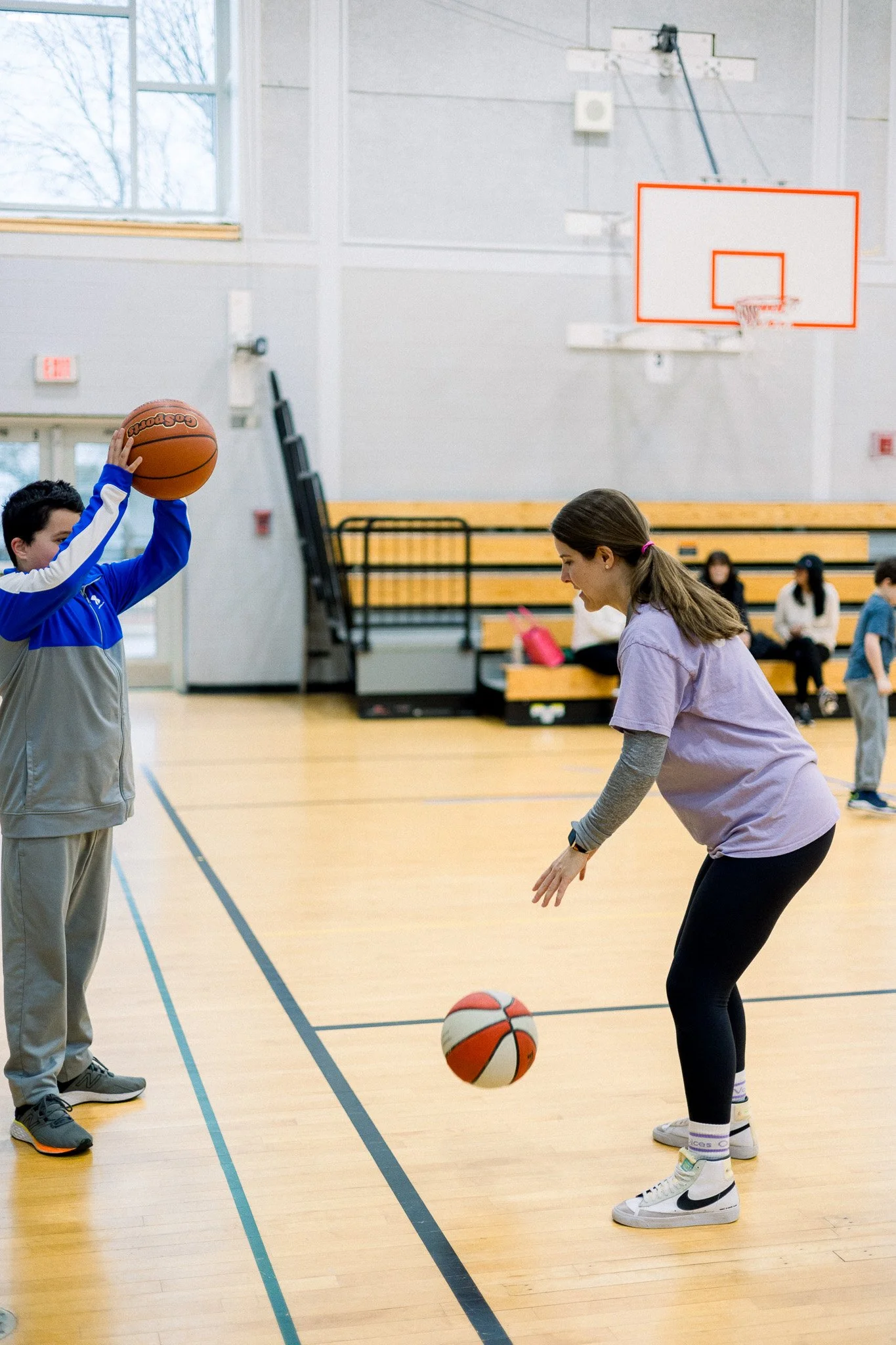
Want to Practice Basketball at Home?
You don't need a full basketball court or expensive equipment to introduce your child to basketball! A child-sized basketball, an adjustable hoop, and a little space can create plenty of opportunities for fun at home. During the colder months, you can even bring basketball indoors using a soft foam ball and a laundry basket for simple throwing and shooting games. We've put together some of our favorite basketball equipment recommendations to help families get started.
SHOP OUR BASKETBALL EQUIPMENT RECOMMENDATIONS HERE!
Ready to Get Started?
If your child loves to run, jump, throw, or simply wants to try something new, basketball might be the perfect sport to explore!
Inclyousion Sports offers inclusive, non-competitive basketball programs designed to help children learn sports skills, build confidence, make friends, and have fun.
Click here to find a local Inclyousion Sports basketball program near you!
This post contains Amazon affiliate links. As an Amazon Associate, we may earn from qualifying purchases.